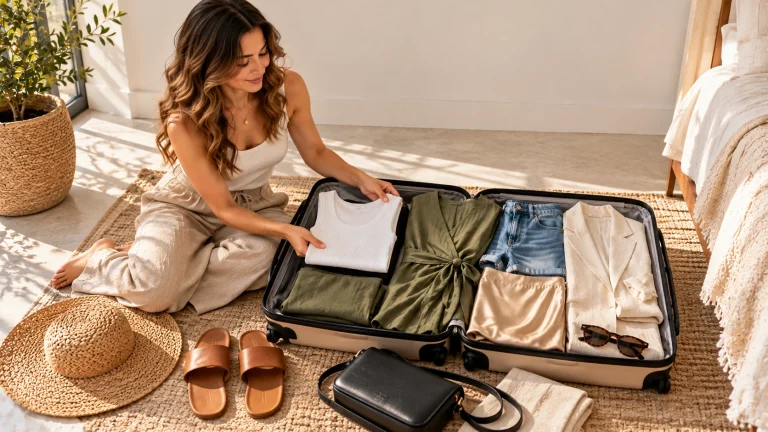
7 Travel Wardrobe for the Summer of 2026 Essential and Stylish Ideas – Compact, Comfortable, and Chic Packing Guide
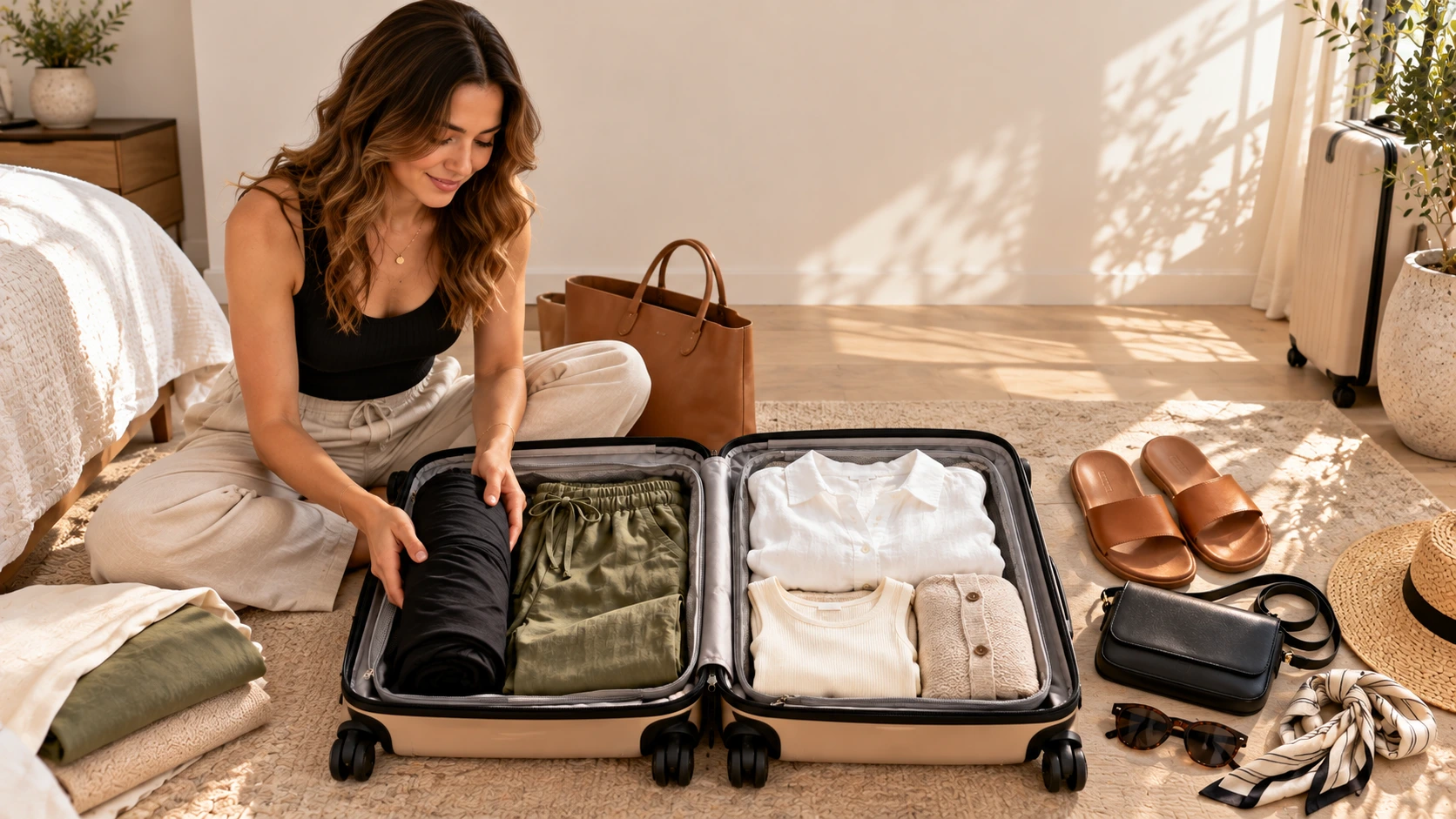
Packing a travel wardrobe for summer trips feels like solving a puzzle where the pieces never quite fit, especially when you want to look stylish across different destinations without checking a full suitcase. Most women either overpack and drag heavy luggage through airports or underpack and spend vacation money buying things they forgot.
These seven travel wardrobe essentials solve the packing problem by covering every summer travel scenario from beach days and city sightseeing to evening dinners and long flight days. Each piece was selected based on packability, wrinkle resistance, and the number of outfits it creates when combined with the others. The fashion trends shaping 2026 favor exactly the kind of versatile, multi-functional pieces that travel wardrobes demand.
1. A Wrinkle-Resistant Midi Dress That Packs Flat

The single most valuable piece in any travel wardrobe is a midi dress that rolls into a compact cylinder, survives twelve hours in a suitcase, and comes out looking ready to wear without ironing. Wrinkle-resistant fabrics like jersey, modal, and ponte knit make this possible while delivering the drape and movement that summer dressing requires.
A solid-colored midi dress in black, navy, or olive works across the widest range of settings because it can be dressed up with jewelry and heeled sandals or dressed down with flat slides and a crossbody bag. The midi length specifically suits travel because it provides enough coverage for houses of worship, museums, and formal restaurants that shorter dresses cannot enter. Choosing a dress with a defined waist, either through a wrap closure or a cinched seam, ensures it flatters without needing a belt that adds to packing volume. Women building polished summer wardrobes consistently rank the wrinkle-resistant midi as their most-packed vacation piece.
Pro Tip: Roll your midi dress tightly around a dry cleaning bag or tissue paper rather than folding it. The slippery layer between fabric folds prevents creasing during transit, and the dress comes out of the suitcase looking nearly pressed.
2. Lightweight Joggers That Pass as Trousers

Travel-weight joggers have replaced traditional sweatpants and stiff trousers as the go-to pant for summer trips because the right pair handles flights, city walking, and casual dining without looking like loungewear. The category has improved dramatically in 2026, with brands like Everlane, Vuori, and Zara producing joggers with tapered cuts and structured waistbands that read as real trousers.
I switched to jogger-style travel pants two summers ago after a trip through Southern Europe where traditional cotton trousers became unbearable in 38-degree heat, and the difference in comfort over twelve-hour sightseeing days was immediately noticeable. The best travel joggers use a ponte or tech-stretch blend that holds its shape without the stiffness of chinos, and a slim tapered ankle prevents the outfit from reading as athleisure. Pairing these with the midi dress for contrast creates the kind of legging and jogger styling that makes travel dressing feel effortless rather than compromised.
3. A Versatile Button-Down That Layers Three Ways
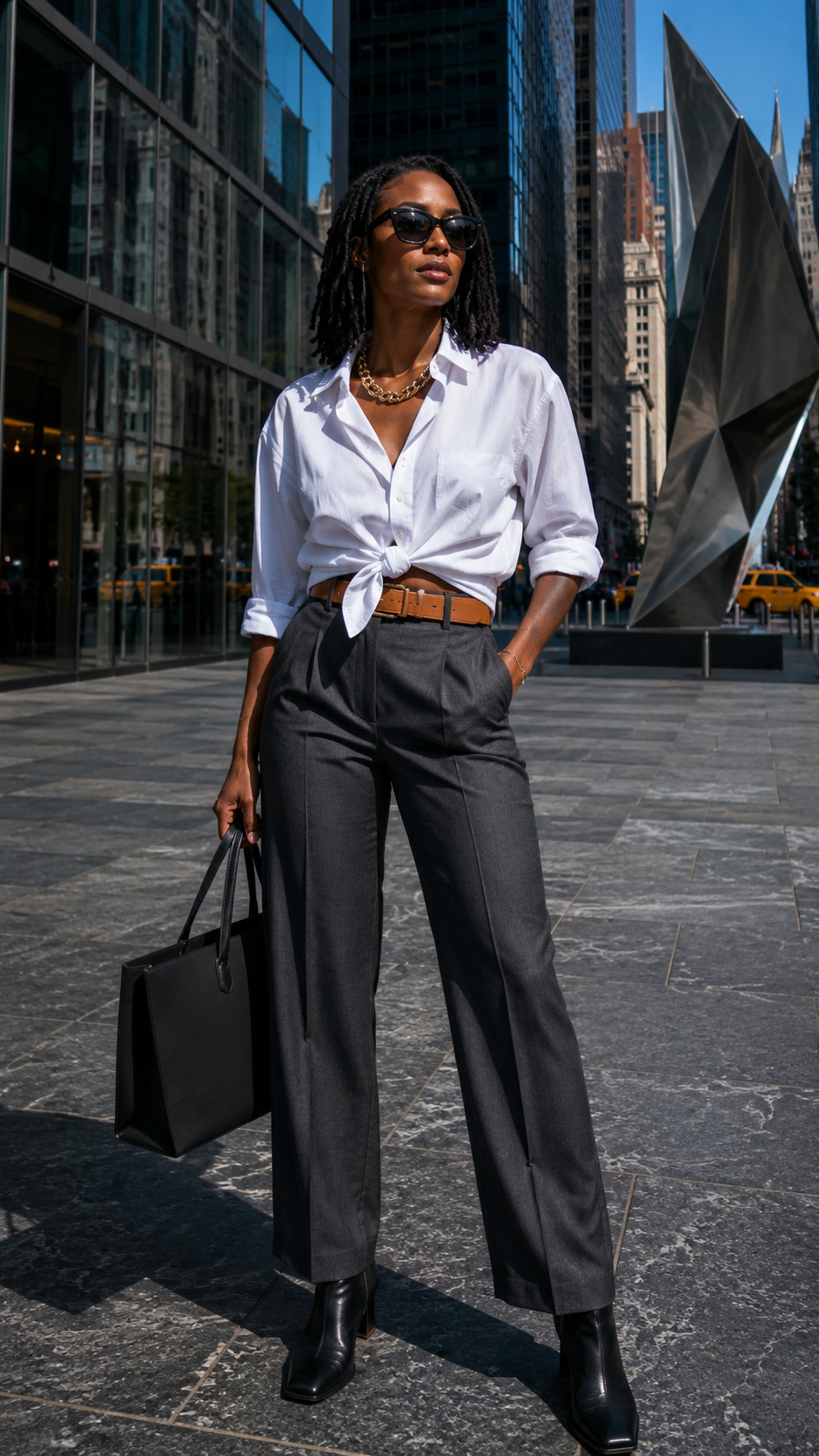
A lightweight cotton or linen-blend button-down earns its travel wardrobe spot by functioning as three separate garments: a structured top when buttoned and tucked, a casual layer when worn open over a tank, and a beach cover-up when thrown over swimwear. No other single piece delivers this range.
Choosing white, cream, or soft blue in a relaxed fit provides the cleanest versatility because the shirt coordinates with every bottom and layering piece in the travel lineup. The collar and button details add enough structure to pass as smart-casual in restaurants, while rolling the sleeves to the elbow keeps the look relaxed for daytime exploration. This layering strategy mirrors the capsule wardrobe approach where each piece must serve multiple roles to justify its suitcase space.
4. Compression Packing Cubes and the Right Travel Fabrics
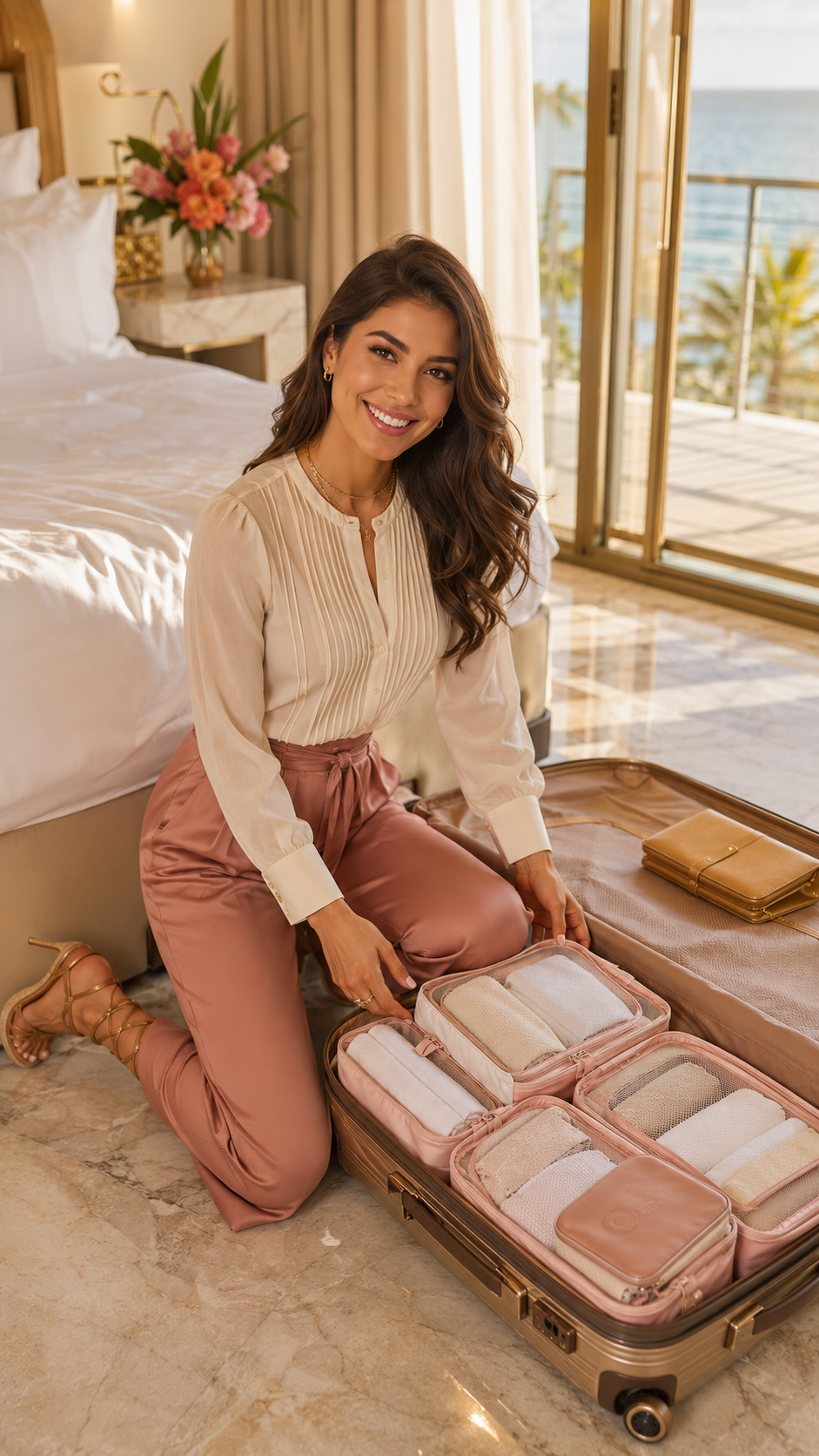
Packing technique matters as much as piece selection when building a travel wardrobe that fits in a carry-on. Compression packing cubes reduce clothing volume by 30 to 40 percent while keeping outfits organized and separated inside the bag.
The fabric of each piece determines how well it survives compression. Natural fibers like linen wrinkle heavily under compression, while synthetic-blend fabrics like polyester-viscose and nylon-spandex emerge nearly wrinkle-free. The smartest approach is packing wrinkle-prone pieces on top and compression-resistant pieces at the bottom where pressure is highest. Understanding which fabrics handle beach and travel conditions helps you make purchasing decisions that serve both style and packability.
Warning: Avoid storing leather sandals or belts inside compression cubes with clothing because the pressure creates permanent indentation marks on soft fabrics like jersey, silk, and modal. Pack leather items separately in a shoe bag or along the outer edges of the suitcase where they are not compressed against garments.
5. One Pair of Walking Shoes That Handle Every Surface
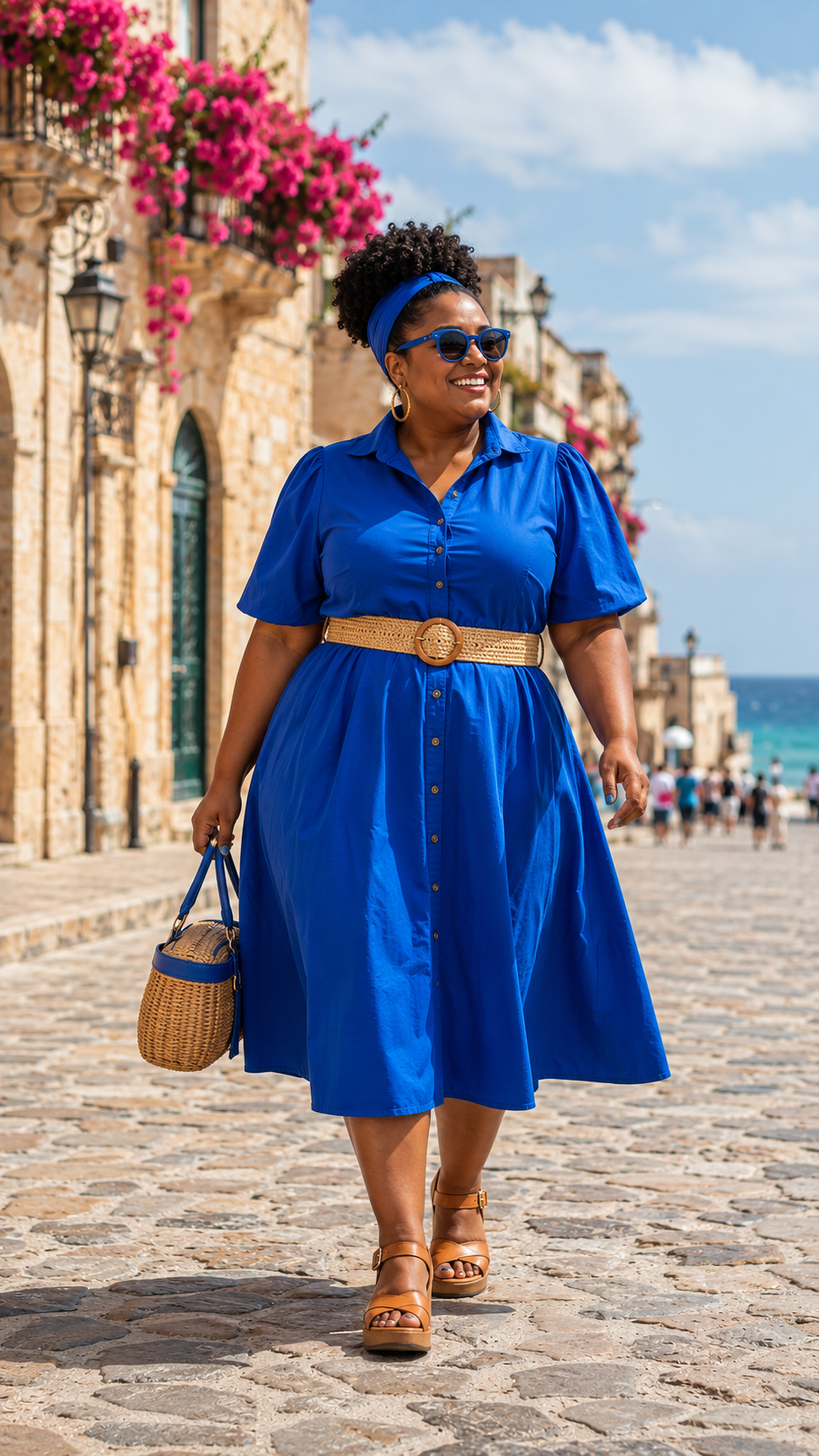
The single hardest packing decision in any travel wardrobe is shoes because they take up the most space and most women want options for different settings. The solution is choosing one pair that handles cobblestones, sand transitions, restaurant floors, and eight-hour walking days without causing blisters.
Leather or vegan leather slide sandals with a contoured footbed and a slight platform sole have emerged as the top travel shoe recommendation for summer 2026 because they provide arch support comparable to sneakers while looking polished enough for restaurants. Brands like Birkenstock, Veja, and Allbirds have released summer styles that specifically address the comfort-meets-style gap that travelers face. The contoured footbed is non-negotiable for travel shoes because flat, unsupported soles cause foot fatigue within the first two hours of a walking-heavy day. Exploring quality footwear options that balance performance with affordability prevents overspending on shoes that might not survive a full trip.
Did You Know: The average tourist walks between 15,000 and 25,000 steps per day during sightseeing trips, which is three to five times more than a typical office day. This is why travel shoe selection based on support and cushioning matters significantly more than style alone.
6. A Crossbody Bag That Replaces Your Entire Purse Collection

Packing multiple bags for different occasions wastes valuable suitcase space and adds unnecessary weight. A single structured crossbody bag in leather or quality vegan leather handles day sightseeing, evening dinners, and everything in between when the size and color are chosen correctly.
A colleague who travels for work six months of the year insists on one rule: the crossbody must fit a phone, passport, card holder, lip product, and sunglasses simultaneously without bulging. A medium-sized bag in black or tan leather meets this requirement while coordinating with every outfit in the travel rotation. The crossbody strap keeps hands free for luggage, maps, and food, which is functionally superior to clutches and tote bags in transit-heavy settings. The same principle of versatile, functional accessories for workwear applies to travel styling, where every accessory must justify its presence through daily utility.
7. The Packable Layer That Saves You on Every Flight
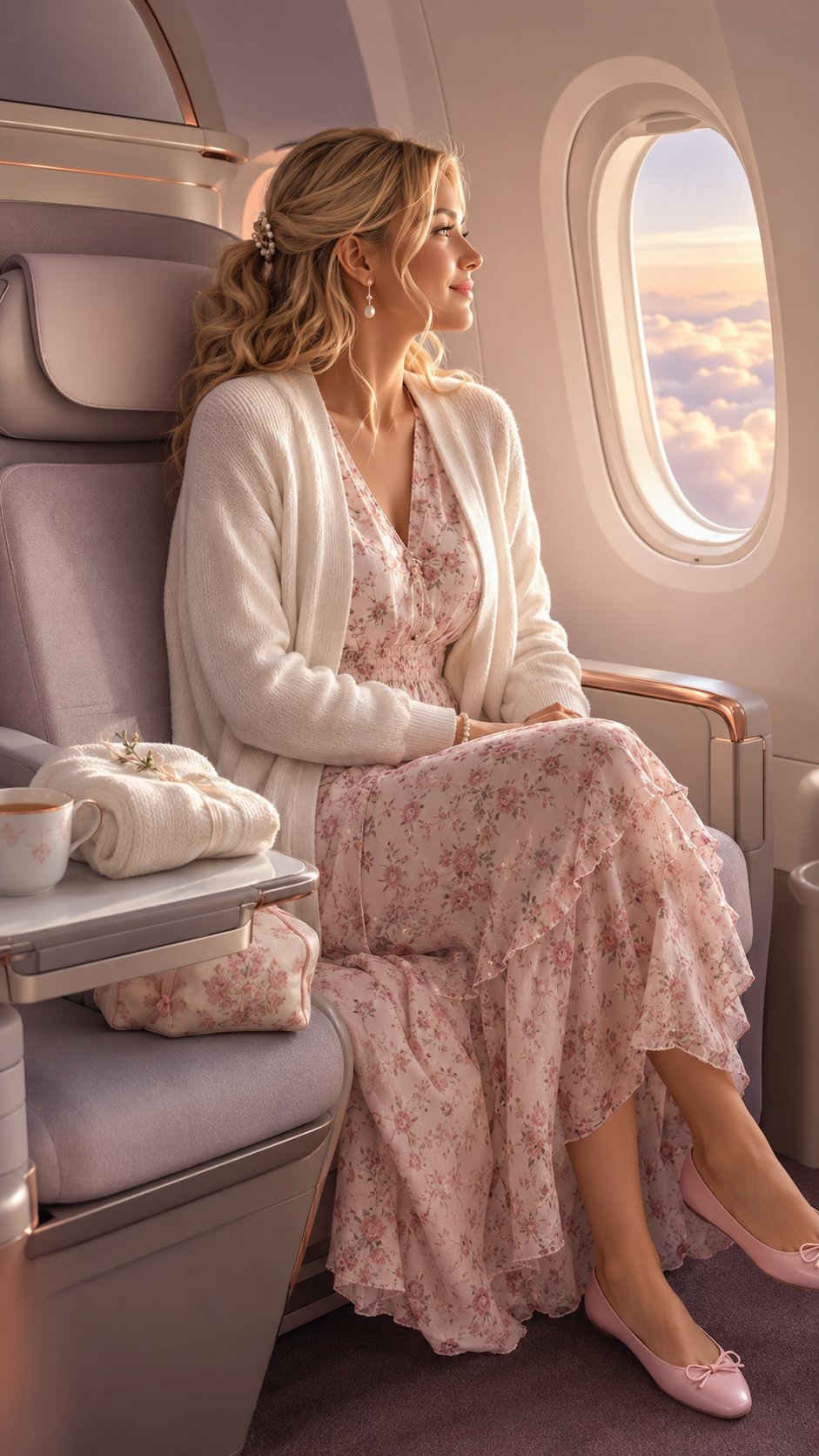
Air-conditioned flights, over-cooled museums, and unexpected evening breezes all demand a lightweight layer that packs small enough to fit in a bag pocket but provides genuine warmth when needed. Skipping this layer is the single most common travel packing mistake because it leads to either uncomfortable cold or expensive emergency purchases at airport shops.
I learned this the hard way during a summer trip where a 35-degree outdoor temperature dropped to what felt like 15 degrees inside a museum, and having a packable layer in my bag saved three hours of comfortable touring. A lightweight knit cardigan, a packable puffer vest, or a thin merino wool wrap all serve this purpose effectively. The key requirement is compressibility; the layer must fold or roll into a size smaller than a paperback book. The beach-to-city-to-evening styling that defines summer 2026 travel has made packable layers a standard part of the multi-setting outfit conversation.
Common Mistake: Packing a heavy denim jacket or structured blazer as your travel layer wastes enormous suitcase space because rigid fabrics do not compress. A merino wool cardigan provides equal warmth in half the packing volume and weighs significantly less.
Packing Strategy: How to Fit a Full Week Into a Carry-On
Fitting seven days of summer outfits into a carry-on suitcase requires a systematic approach that goes beyond rolling versus folding. The strategy starts with choosing pieces that create multiple outfits and ends with organizing them in a way that maximizes every cubic inch of available space.
| Packing Layer | What Goes Here | Why This Position |
|---|---|---|
| Bottom layer | Joggers, denim, heavier fabrics | Compression-resistant items absorb pressure |
| Middle layer | Rolled dresses, button-down, tops | Soft rolls fill gaps between structured items |
| Top layer | Delicate fabrics, swimwear, undergarments | Protected from compression, easy to access first |
| Shoe compartment | Walking shoes stuffed with socks and small items | Maximizes dead space inside shoes |
| Outer pocket | Packable layer, passport, in-flight essentials | Accessible without opening main compartment |
This layering strategy keeps wrinkle-prone items protected while compressing durable pieces efficiently. Planning outfits day by day before packing reveals exactly which items overlap across multiple looks. The most seasoned travelers also recommend packing a lightweight tote inside the suitcase that unfolds into a beach or shopping bag at the destination.

Try This: Pack your suitcase completely, then remove two items. If you can still create an outfit for every planned day without those two pieces, they were unnecessary additions driven by “just in case” thinking rather than genuine need.
Climate-Adaptive Dressing for Multi-Destination Summer Travel

Multi-destination trips that cross climate zones present the toughest travel wardrobe challenge because the same suitcase needs to work in a coastal 35-degree beach town and a mountain city that drops to 18 degrees in the evening. The solution is layering strategy rather than packing for each climate separately.
A base layer system using the fitted tank, button-down, and packable layer from this guide covers a temperature range from 18 to 38 degrees when combined correctly. Adding a lightweight scarf that doubles as a wrap, hair accessory, and modesty cover for cultural sites extends the system further without significant packing impact. The spring-to-summer transitional outfit strategies that handle fluctuating temperatures at home apply equally to multi-climate travel. The same principles work for beach-focused destinations where daytime and evening temperatures can differ by 15 degrees or more.
Important Note: Always check the 10-day weather forecast for every destination on your route before finalizing your packing list. A single unexpected rainy day or cold snap can derail an entire trip if the wardrobe cannot accommodate conditions outside the expected summer heat.
Travel Wardrobe Mistakes That Cost Time and Money

The most expensive travel wardrobe mistakes are not bad outfits but missing essentials that force emergency purchases at inflated tourist-area prices. Forgetting a packable layer, underestimating walking shoe needs, and packing fabrics that wrinkle beyond rescue are the three errors that consistently cost travelers both money and comfort.
Overpacking is equally costly because checked bag fees, luggage weight surcharges, and the physical strain of hauling a heavy suitcase through transit hubs all reduce the travel experience. The summer fashion trends for 2026 specifically favor lightweight, packable materials precisely because the industry recognizes that modern travelers prioritize mobility over wardrobe size. Building a travel wardrobe that accommodates all body types and comfort needs ensures every piece gets worn rather than sitting unused at the bottom of a suitcase.
Did You Know: The average checked bag fee across major airlines increased to thirty-five dollars each way in 2026, meaning a round-trip checked bag now costs seventy dollars. A well-planned carry-on travel wardrobe saves that amount on every single trip, which adds up to hundreds of dollars annually for frequent travelers.
A travel wardrobe for summer 2026 works best when every piece earns its suitcase space through versatility, packability, and cross-setting functionality. Choose seven pieces that work together, pack them strategically, and travel lighter than you ever thought possible while looking better than the overpacked alternative.