20 Short Haircuts for Women Over 60 With Fine Hair
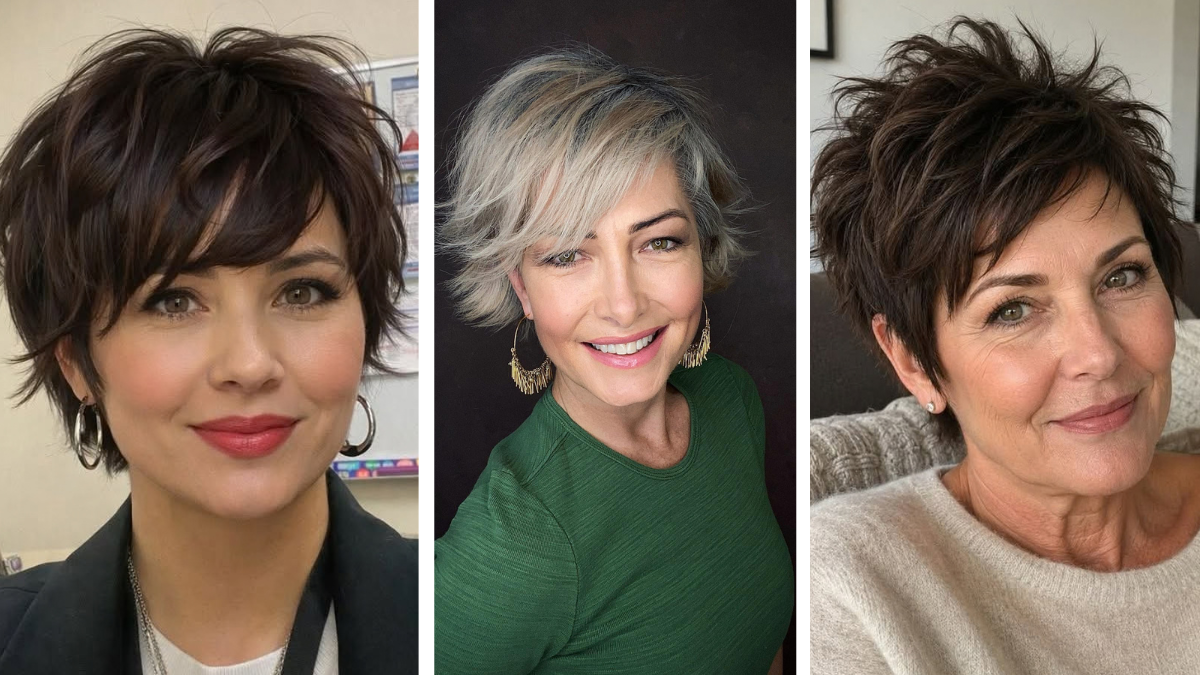
Fine hair after sixty behaves differently than it did at forty. It sits flatter at the roots, the ends thin out faster, and a cut that looked full in the salon chair can collapse by the time you get home. The answer is rarely more product. It is usually a shape that builds volume into the cut itself, so the hair holds up without a round brush and twenty minutes every morning.
That is what these 20 short haircuts for women over 60 do. Some are tousled pixies with layers cut in every direction. Others are blunt bobs with no layers at all, because sometimes weight is exactly what thin hair needs. There are crops that work around glasses, cuts that hide thinning temples, styles for natural silver and for curls, plus one longer option for anyone not ready to lose the length yet.
Each one comes with what to ask your stylist for, how to style it in a few minutes, and when to book the next trim.
1. The Piecey Tousled Pixie That Makes Fine Hair Look Twice as Thick
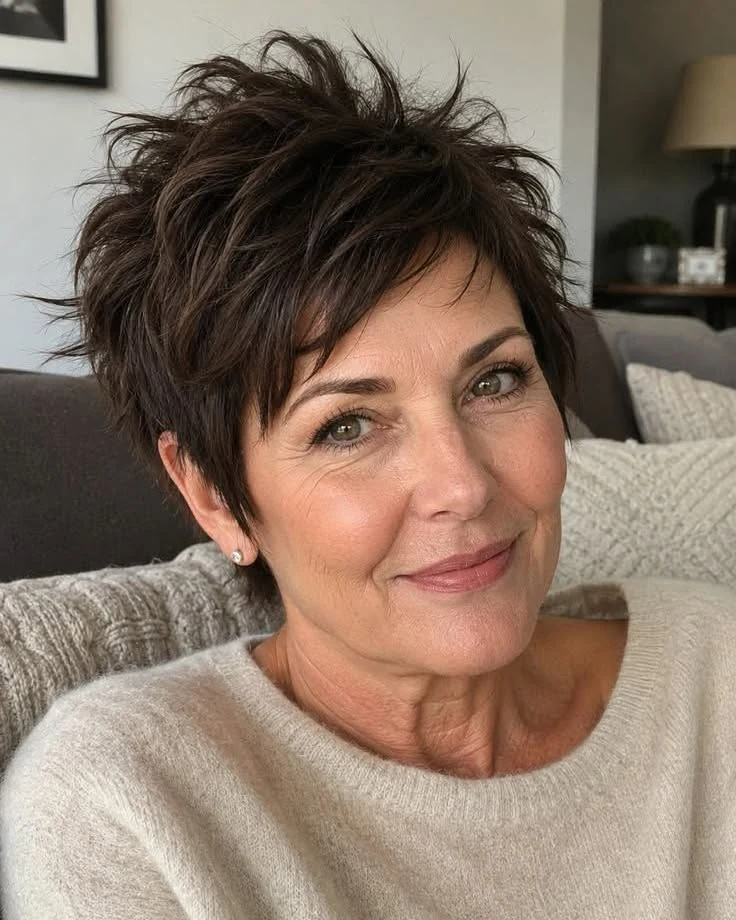
Messy on purpose, and that is the whole trick. The layers here are cut at different lengths and pushed in different directions, so light breaks up across the hair instead of lying flat on it.
What makes it work on fine hair:
- Short, choppy layers at the crown that stand up on their own
- Longer piecey bits at the front that keep it soft around the face
- A deep colour with no heavy shine, so the texture stays visible
- Zero blunt edges anywhere, since blunt lines show scalp
Styling takes about three minutes with a pea of matte paste worked through dry hair with your fingers. Brushes flatten this one, so leave them in the drawer.
2. Blunt One-Length Bob: The Weight Line That Fakes Thickness
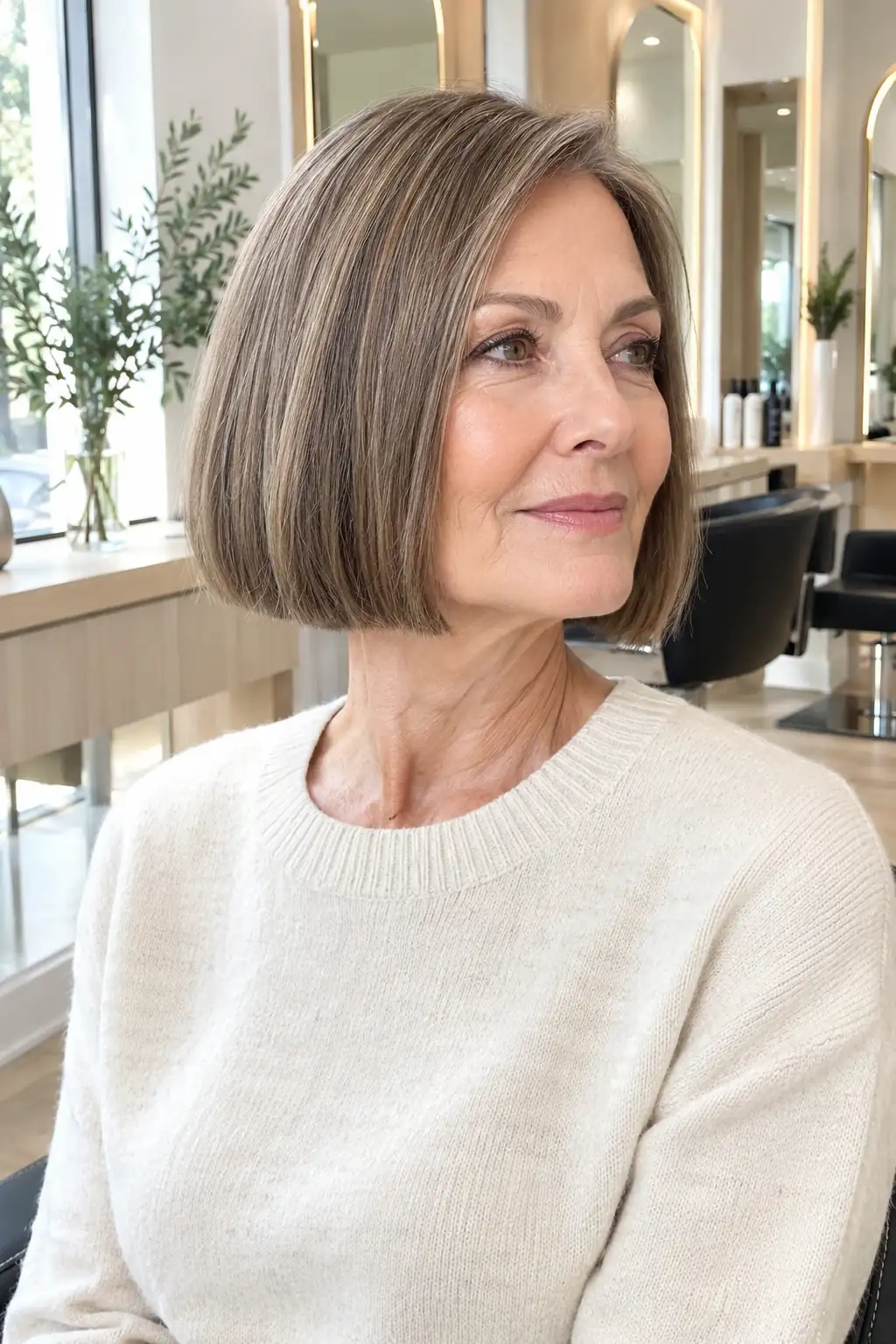
Layers get recommended for everything, and for very fine hair that advice can backfire. Cutting layers removes weight, and weight is exactly what a thin ponytail-width head of hair has too little of.
A blunt bob does the opposite. Every strand ends at the same point, so the bottom edge reads as one solid line instead of thinning wisps. Keep it between the chin and jaw, since anything longer starts pulling flat again.
| Blunt cut, no layers | Heavily layered cut |
|---|---|
| Ends look dense and deliberate | Ends can look sparse and see-through |
| Best for straight, very fine hair | Better for thicker or wavy hair |
| Needs a sharp trim every six weeks | Grows out more softly |
3. Soft Layered Pixie With a Side-Swept Fringe
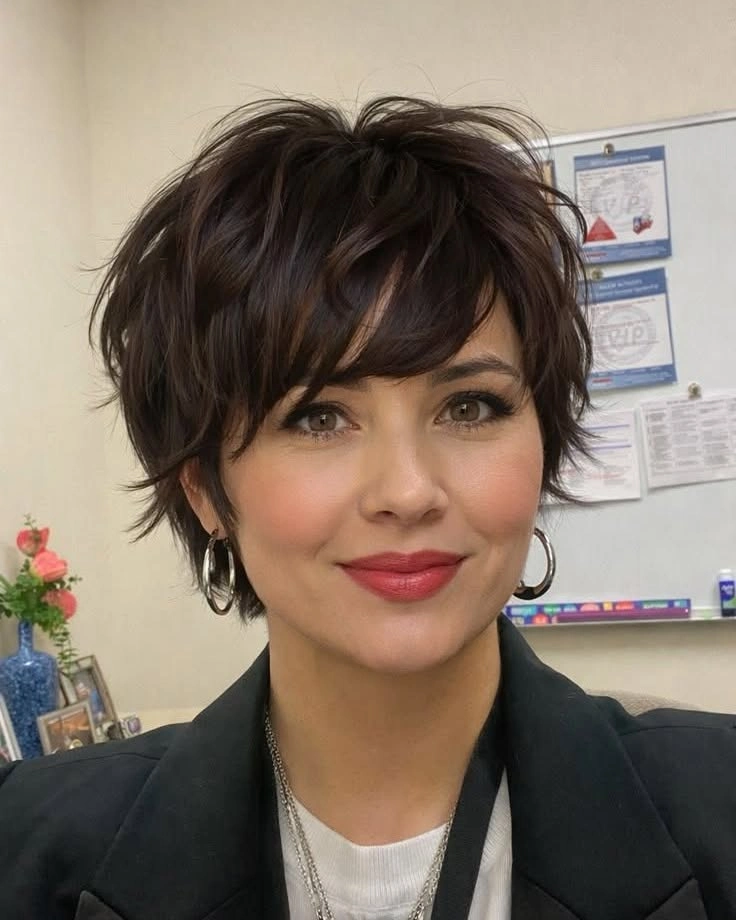
Rounder than the tousled version in number one, and gentler on a heart-shaped or narrow face. The layers curve inward at the sides and the fringe sweeps across the forehead at a diagonal, which softens the hairline without hiding it.
Notice that nothing is cut tight to the head here. Fine hair needs a little air built into the shape, and this cut keeps weight through the sides rather than shaving it away. A fringe changes a short cut more than any other detail, and our guide to bangs by face shape covers which one suits yours.
Ask your stylist for this
4. Stacked at the Back, Longer at the Front
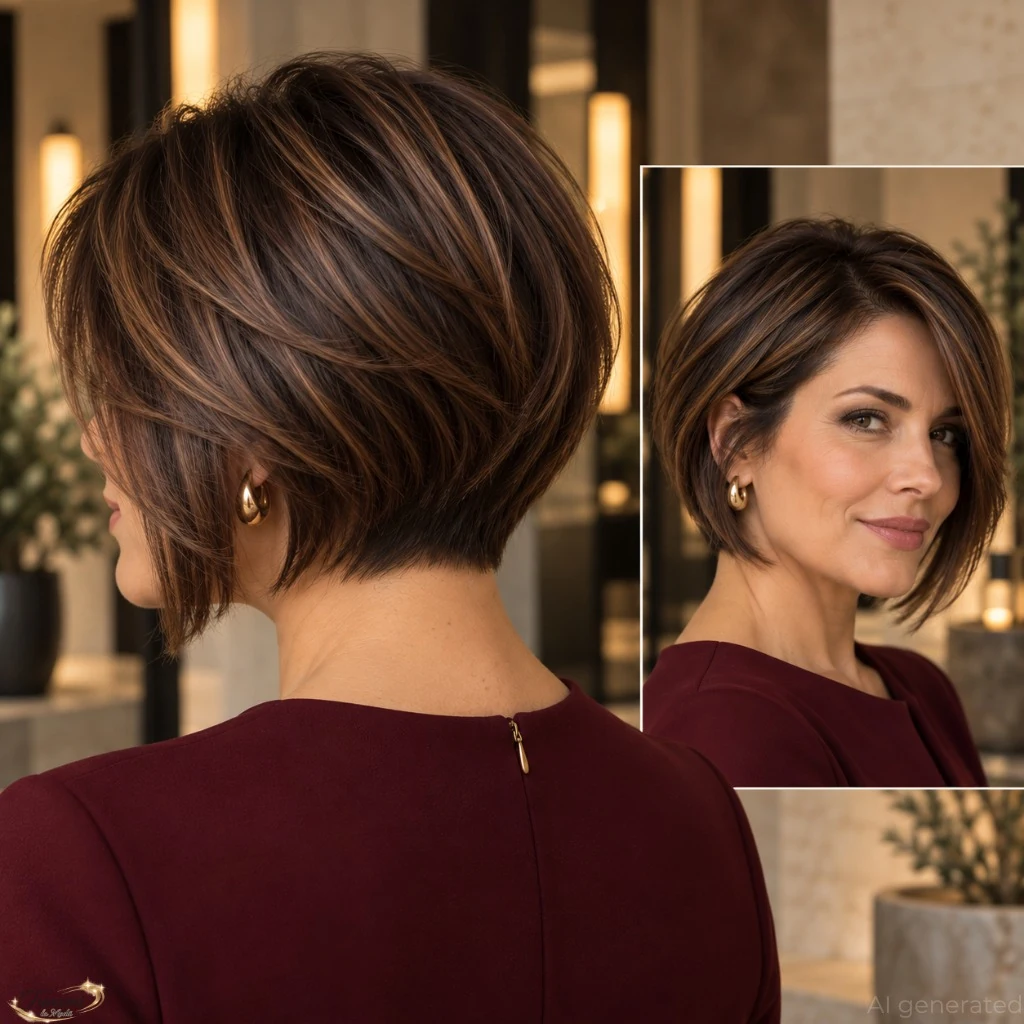
Look at the back view and you can see why this shape suits thin hair so well. The layers are stacked short at the nape and get gradually longer toward the jaw, which pushes the back of the head out and creates lift without a single round brush.
The warm caramel running through the darker base adds another layer of depth, since two tones always read as more hair than one flat colour does. If bobs are your thing, there are more shapes worth knowing in our bob hairstyles guide.
| Stacked bob | One-length bob |
|---|---|
| Volume is built into the cut at the back | Volume has to be styled in every morning |
| Holds its shape as it dries on its own | Tends to sit flat against the head |
| Needs a trim every six weeks to stay sharp | Grows out more forgivingly |
5. Short Shag With Curtain Bangs for Hair That Falls Flat by Noon

Shags get written off as a young person’s cut, which misses what they actually do. The layering pattern sits high and stacks volume where fine hair collapses first: the crown and the sides above the ear.
Three reasons it holds up all day:
- Layers start at the cheekbone, so the hair never gets a chance to lie flat
- Curtain bangs split at the centre and fall to either side, adding width at the temples
- Textured ends mean bedhead looks intentional rather than unbrushed
Apply a texture spray to damp roots, concentrating on the crown.
Rough dry with your fingers, pushing the hair against its natural fall.
Dry the bangs last, brushing them back and away from the centre.
Break up the ends with a little dry wax between your palms.
6. Chin-Length Waves on Natural Salt and Pepper

Grey hair is often coarser than the hair it replaces, and this cut uses that. The bob sits at the chin, the ends flick outward instead of curving under, and a soft wave through the mid-lengths gives the whole thing body that fine hair rarely manages on its own.
No dye, no root line, no monthly appointment. The silver and dark strands mixing together create their own dimension, which is something a single-process colour cannot copy.
⚠️ Watch Out
Curling this shape under makes it read as heavier and rounder at the jaw. Bend the ends outward instead, using the flat iron or a small tong for two seconds per section.
7. The Bixie: Half Bob, Half Pixie, All Volume
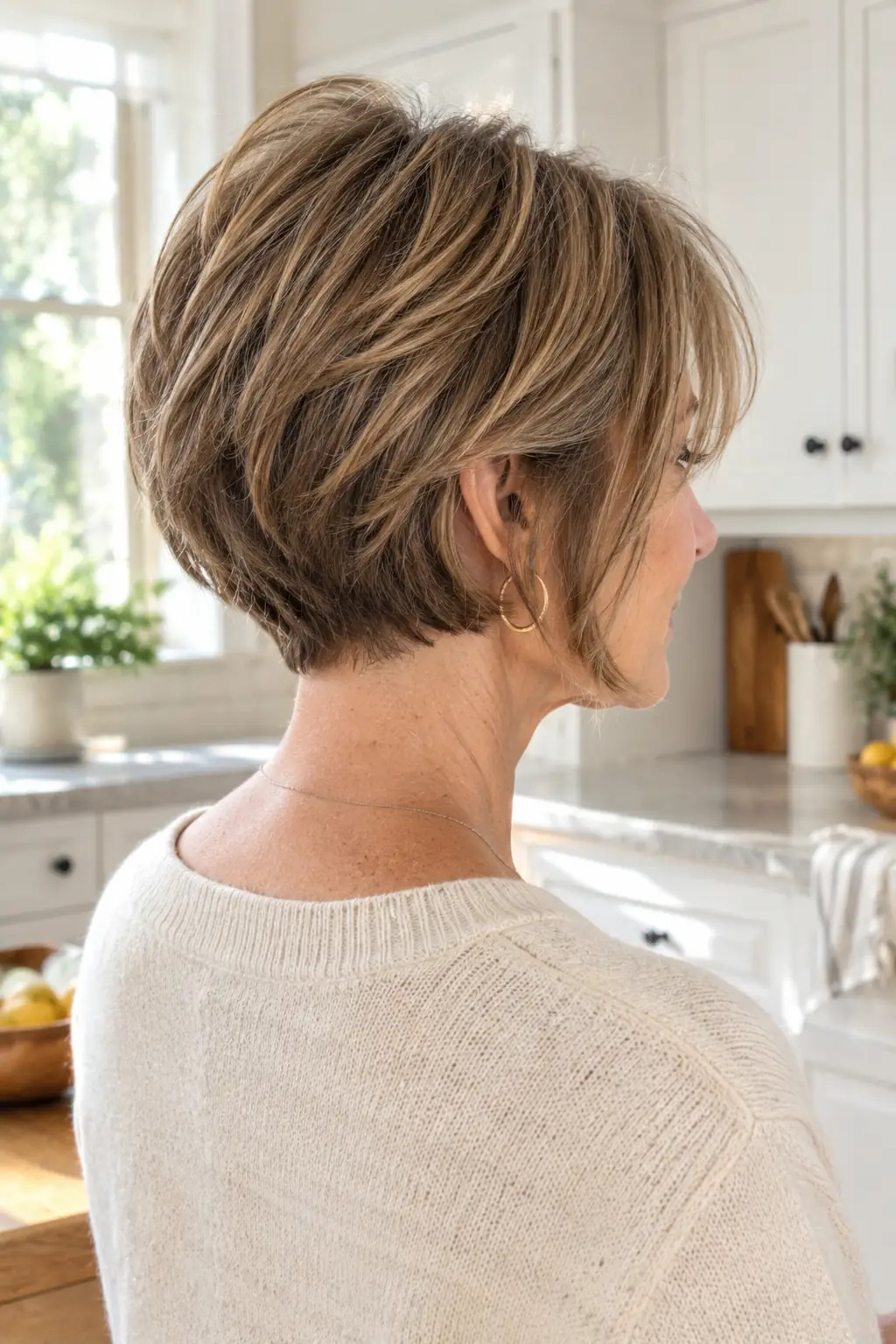
Somewhere between the two sits a cut that borrows from both. The back and sides come in short like a pixie, while the top and front keep enough length to fall over the ears and brush the jaw.
That extra length at the front is what makes it easier to live with than a true pixie. You can tuck it, sweep it, or leave it messy, and it still looks finished. It also grows out into a bob rather than into an awkward shape, which matters if you are testing short hair for the first time.
8. Crown Volume and a Full Fringe on Ash Blonde
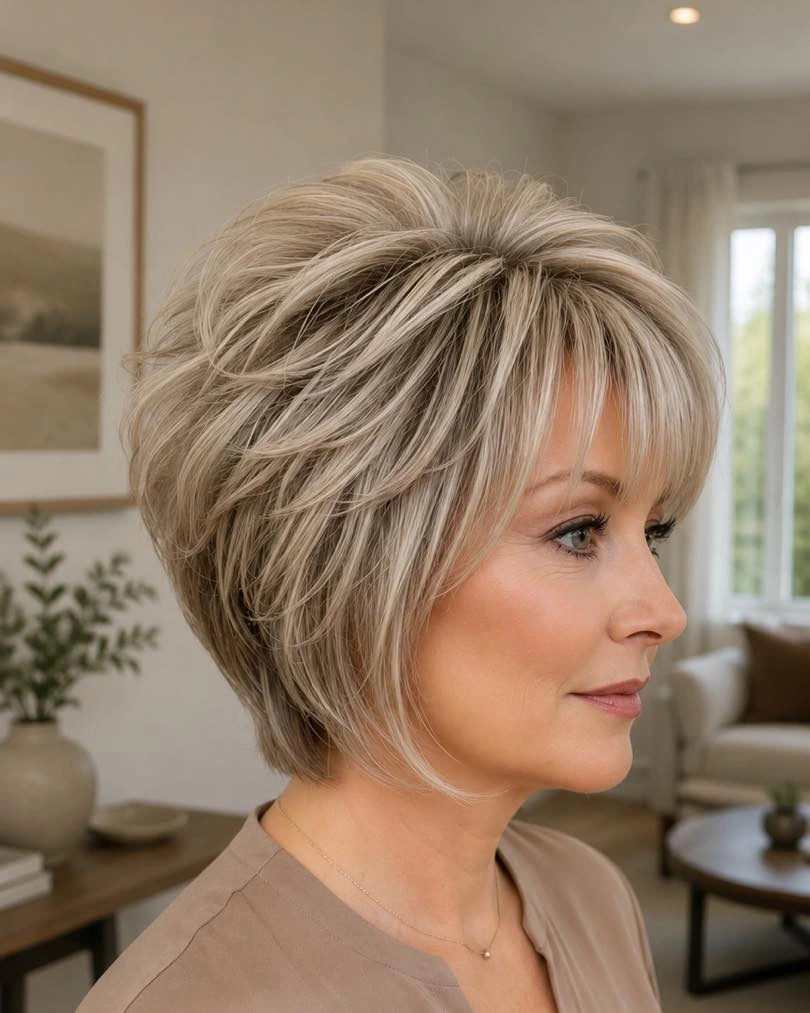
Height at the crown is the single most useful thing fine hair can borrow, and this cut is built around it. The top layers are shorter so they lift, the fringe is full enough to cover a thinning hairline, and the ash blonde highlights sit on a slightly darker base so the roots never look bare.
Here is how that lift is actually created at home:
Spray a root lifter only at the crown while the hair is damp, not all over.
Dry the top section upside down for one minute, then flip back.
Dry the fringe forward first, then sweep it into place while it is still warm.
Let it cool completely before touching it. Warm hair drops, cool hair holds.
9. Silver Long Pixie With Movement Through the Front

What works here is the length balance. The back and sides stay short, but the front section is left long enough to sweep across one eye and tuck behind the opposite ear. That single long piece keeps the whole cut from looking severe.
The silver has been allowed to do its own thing, with the darker roots left visible rather than covered. It reads as deliberate, and it means no root touch-up every four weeks. If you are thinking about going lighter or blending grey properly, our hair colour guide is worth a read first.
10. The Short Crop That Balances a Fuller Face
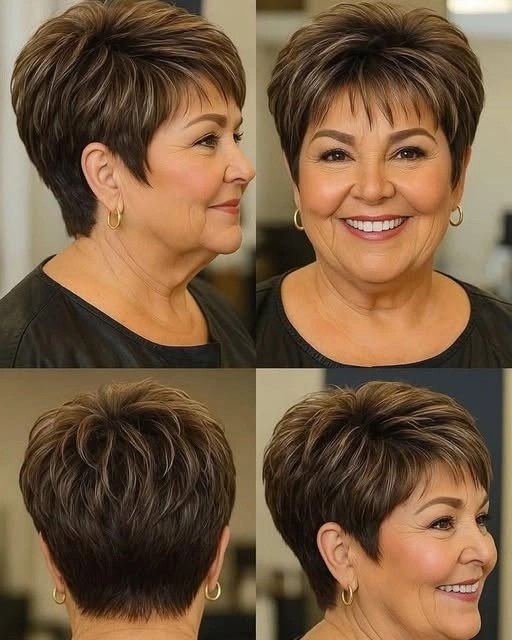
Four angles of the same cut, which tells you a lot. The sides are kept close so nothing adds width at the cheeks, the top is left longer with texture through it, and the fringe is cut short and soft across the forehead.
That combination pulls the eye upward rather than sideways. Warm highlights through the brown add dimension without needing extra length. Round and fuller faces have their own rules worth knowing, and our round face haircut picks go into them properly.
Height on top and close sides do the same job as a longer cut, without any of the weight that drags fine hair flat.
11. Asymmetrical Bob With One Side Longer Than the Other

Uneven on purpose. One side is cut to the jaw, the other sits an inch or two longer, and the difference tilts the whole shape off balance in a way that catches the eye.
For fine hair this does something useful: it stops the cut from reading as a flat, symmetrical helmet. The eye follows the diagonal instead of noticing density. It also gives you a built-in styling decision, since you tuck the short side behind the ear and let the long side fall forward.
12. Soft Wavy Bob With a Brow-Skimming Fringe

Warmth does half the work in this one. Caramel pieces sit through a mid-brown base, and because the hair is waved rather than straightened, those lighter strands keep catching the light at different angles.
The fringe is cut to skim the brows and blends straight into the layers at the sides, so there is no hard line anywhere. It is a cut that looks lived-in by day two, which is exactly what you want when you are not blow-drying every morning. Keeping fine hair in this condition comes down to routine, and ours is laid out in the healthy hair basics guide.
Keep it looking like this
13. Sleek Tapered Pixie With a Long Side Fringe
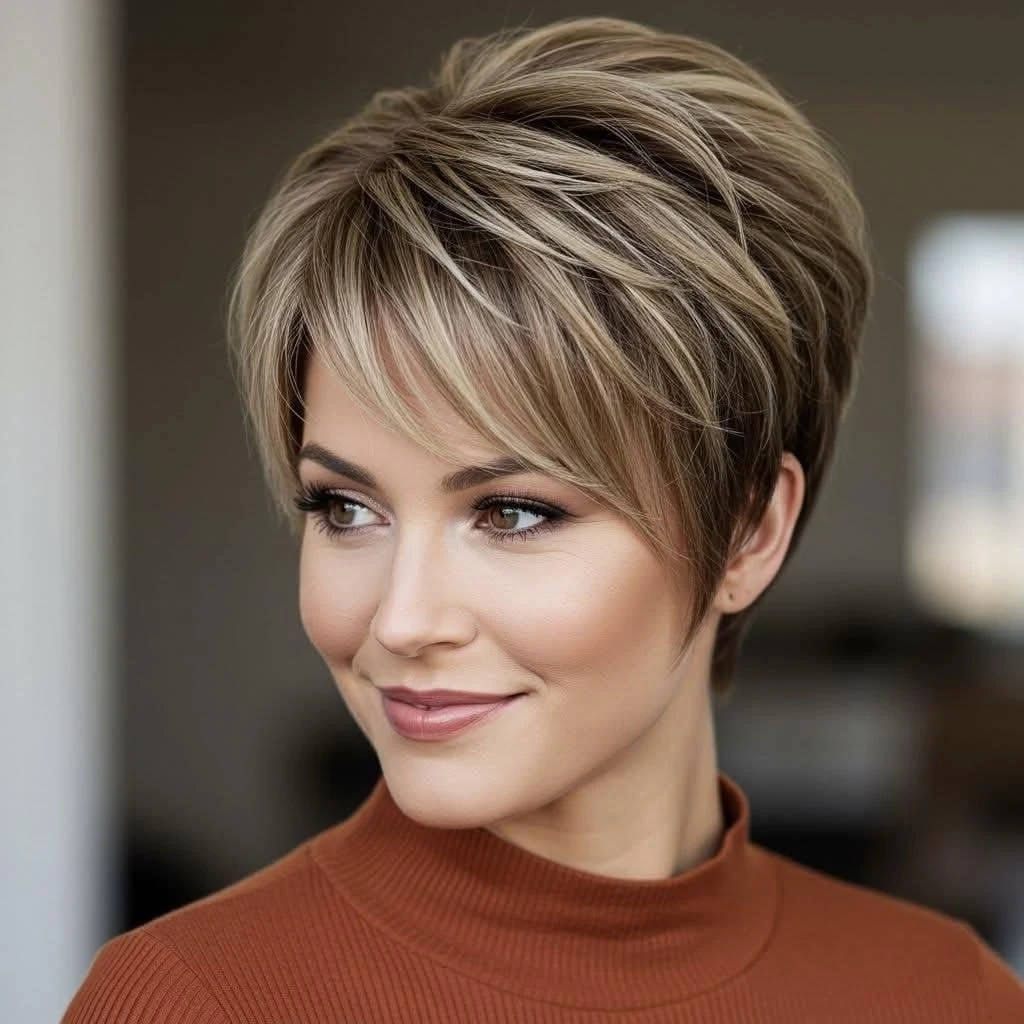
Polished rather than tousled, and it suits hair that refuses to hold texture. The sides taper down toward the ear, the back is kept close, and the long fringe sweeps across the forehead in one smooth piece. A shadowed root under the blonde keeps the top from looking thin where the parting sits.
Smooth cuts show every flaw, so the condition of your ends matters more here than in any messy style.
Use a light serum on the fringe only, so it stays smooth without going greasy.
Ask for a root shadow so the parting keeps some depth.
Heavy creams and waxes, which make fine hair separate and show scalp.
Letting the tapered sides grow past six weeks, since the shape collapses quickly.
14. Fine and Curly at the Same Time: The Rounded Crop That Respects Both
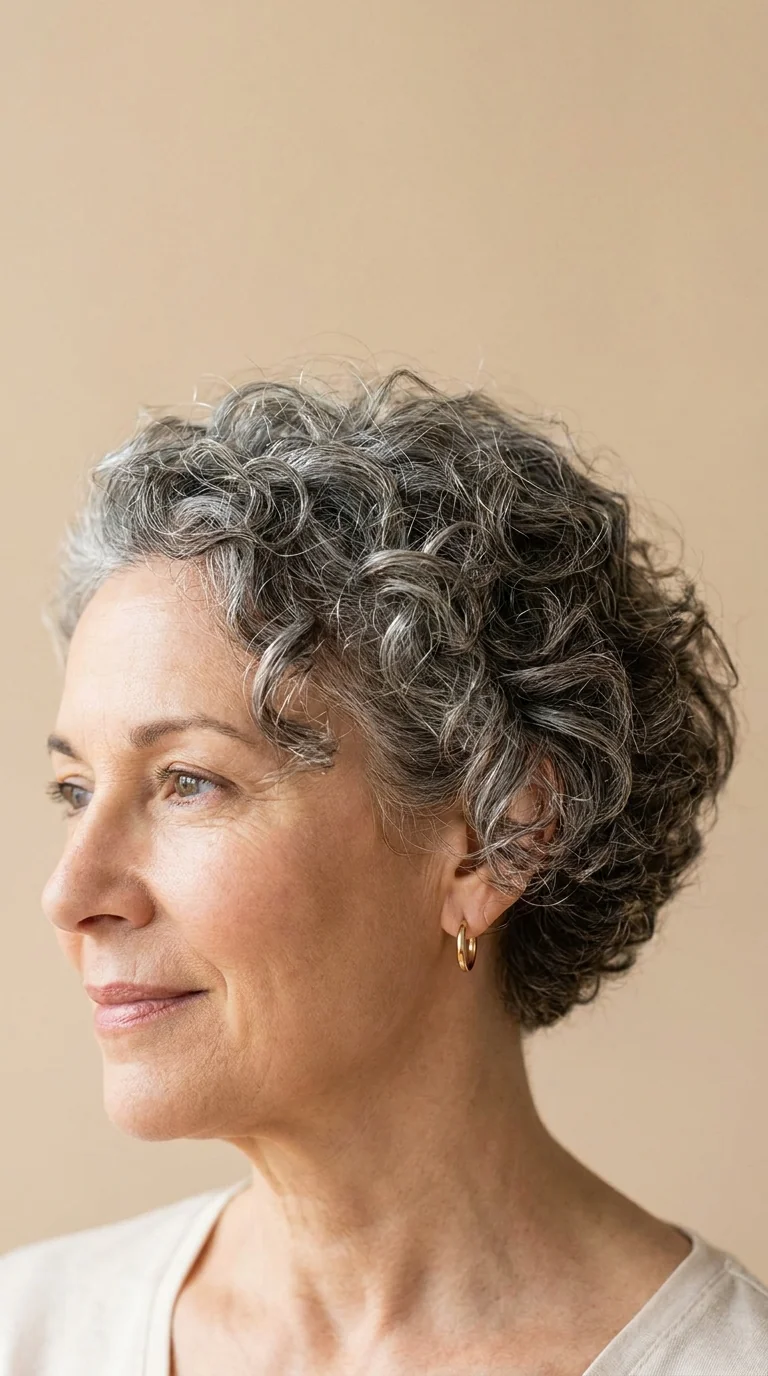
Fine hair with curl in it is its own problem. The strands are delicate, but the curl pattern adds bulk in places you did not ask for, usually at the sides.
A rounded crop handles it by keeping length on top where the curl can stretch out and stand up, and taking weight out at the sides where it widens. Cut it dry, curl by curl, so the stylist can see where each one lands. Cut wet, it springs up two inches shorter than planned. There are more shapes that work with curl in our short curly hairstyles guide.
📌 Good To Know
Fine curls cannot carry heavy creams. Use half the amount you think you need, apply it to soaking wet hair, then diffuse on low heat without touching the curls until they are dry.
15. Short Bob With a Middle Part for Anyone Who Never Suited a Side Part

Side parts get pushed on older women constantly, and they do not suit every face. A centre part sits differently: it frames the face symmetrically and draws a clean vertical line down the middle, which lengthens rather than widens.
The catch is that a centre part needs some body at the root, or the hair splits open and shows scalp along the parting. Two things fix that, one at the salon and one at home.
Ask for a shadow root or soft lowlights so the parting has depth.
Blow dry the roots in the opposite direction first, then part it down the middle.
Combing the parting into a razor-sharp line, which widens the gap.
Parting in the same exact spot daily, since the hair learns to fall open there.
16. A Short Crop That Works With Glasses, Not Against Them
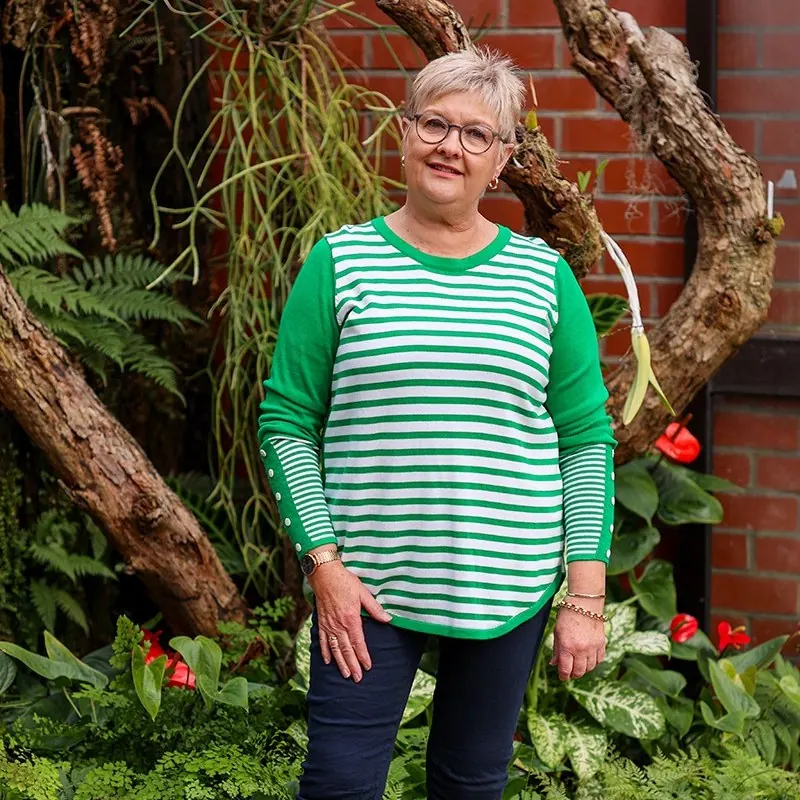
Glasses and short hair fight each other when the cut sits at the same level as the frames. Here the fringe is kept light and swept sideways, so it lands above the top of the glasses rather than tangling with them. The rest of the crop is kept close at the sides, which stops that bulky look that happens when hair pushes out over the arms of a frame.
The colour has gone soft and blended, with no hard line between the grown-out grey and the lighter ends.
💡 Quick Tip
Wear your glasses to the appointment and keep them on while the fringe is cut. A fringe that looks right bare can sit wrong the second the frames go back on.
17. A Wispy Crop for Thinning Temples and a Receding Hairline

Sparse patches at the temples are common after sixty, and most cuts make them worse by pulling hair away from the face. This one does the opposite.
What the cut actually does:
- ▸Wispy pieces are left long at the temples to fall forward over thin spots
- ▸The fringe is cut soft and irregular, never straight across, so gaps stay hidden
- ▸Length is kept short overall, since long hair drags the front back and exposes the hairline
- ▸A slightly darker root shade reduces the contrast between hair and scalp
One honest note. Cuts and colour can disguise thinning, but a hairline that is receding quickly, or shedding that comes on suddenly, is worth showing to a doctor or dermatologist rather than only a stylist.
18. From Long and Flat to a Layered Silver Pixie
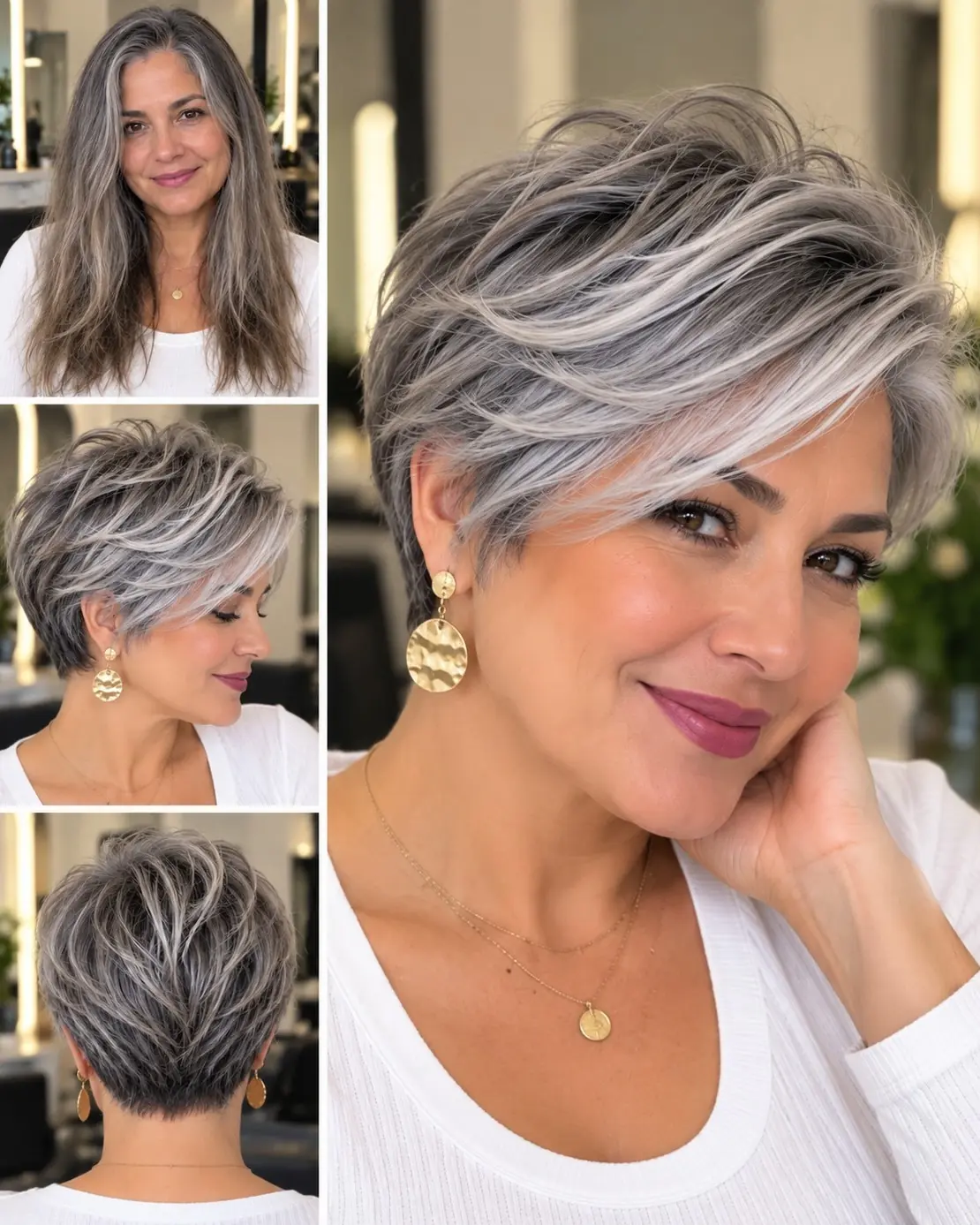
The before shot in this set is the one worth studying. Long grey hair with no layers pulls straight down, and all the weight sits at the ends where it does nothing for you.
The cut that followed moved every bit of that weight upward. Short layers through the crown, a longer textured piece falling across the forehead, and bright white highlights placed at the front where they catch the light.
Long, one length, weight sitting at the ends. The hair hangs flat against the head and the grey looks dull rather than bright.
Layers through the crown, a long piece at the front, and white highlights placed where the light hits. Same amount of hair, far more of it visible.
More cuts in this family are collected in our pixie hairstyle ideas, including guidance on which shapes suit which face.
19. Not Ready to Go Short? Feathered Layers at Collarbone Length
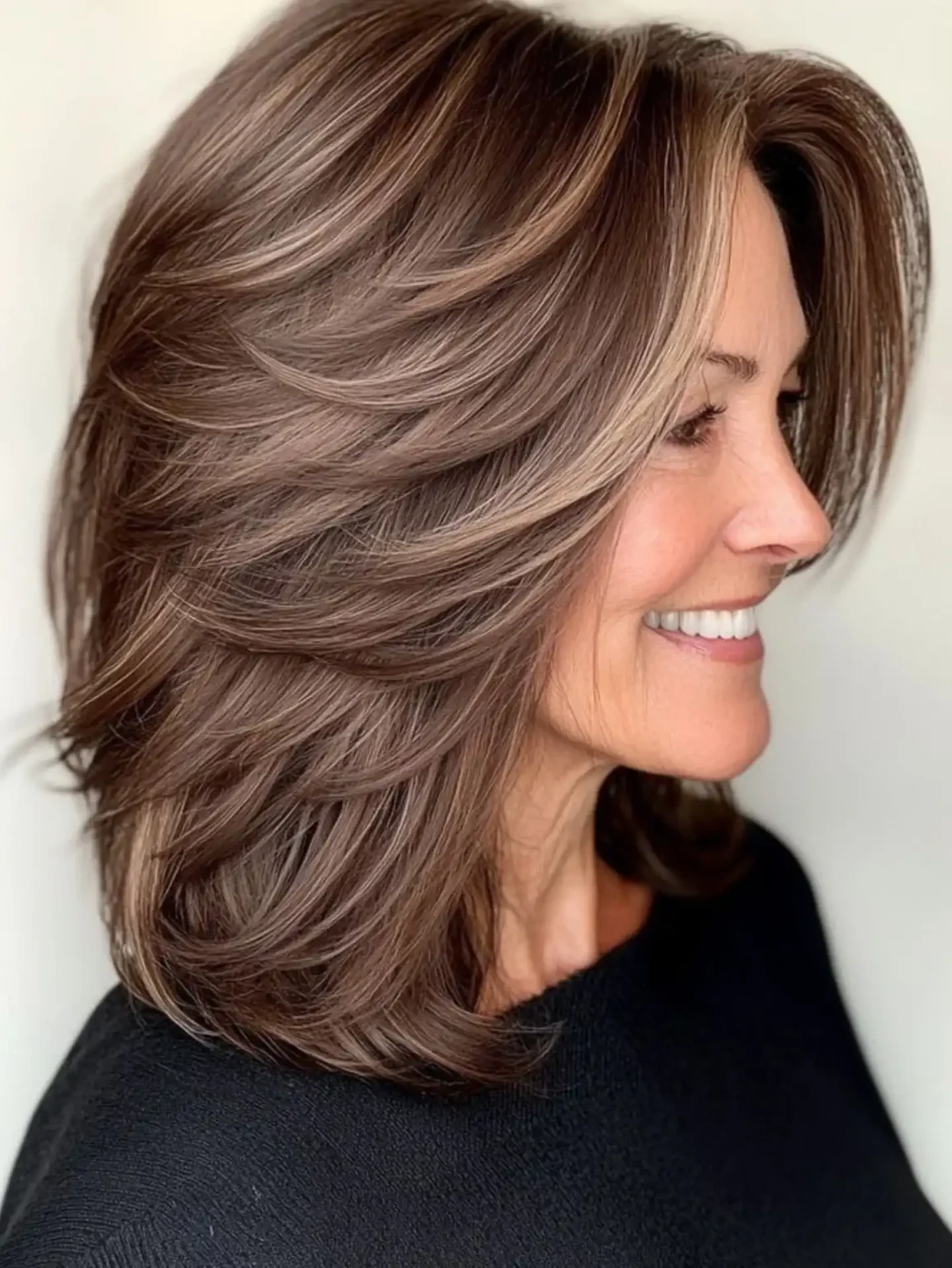
This one is longer than everything else here, and that is the point. Going short is a big jump, and plenty of women want the volume without losing the length first.
What makes it work on finer hair:
- ▸Layers start at the cheekbone, so the top half never lies flat
- ▸The ends are feathered rather than blunt, which keeps them from looking sparse
- ▸Lighter pieces around the face lift the skin tone
- ▸It still ties back, which short cuts cannot do
Worth being honest though. This needs a round brush most mornings, which the pixies on this list do not. If mid-length is where you want to stay, our medium-length low-maintenance styles are a gentler place to start.
20. The In-Between Stage: How to Style a Pixie You Are Growing Out
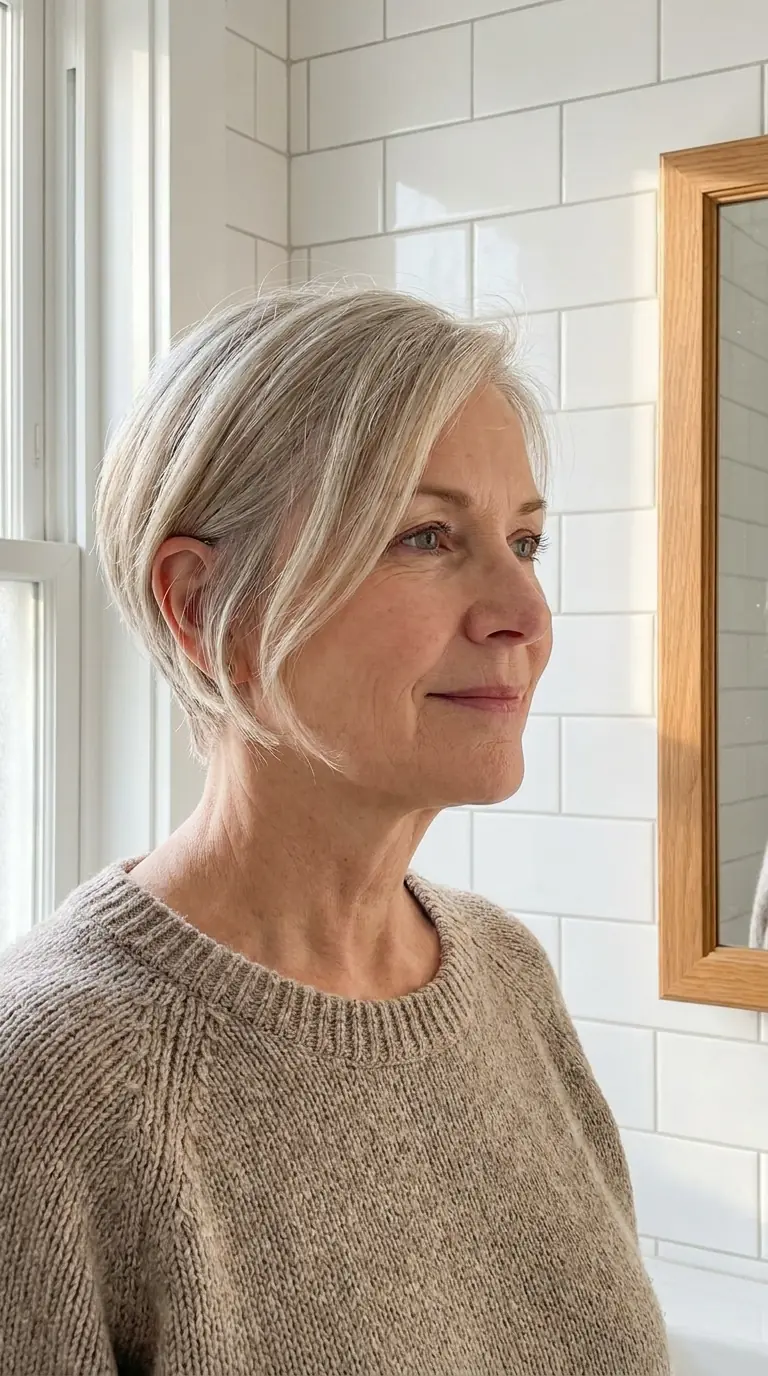
Every short cut goes through a difficult month somewhere around week ten. The sides flare out over the ears, the back turns into a shelf, and the front is too long to spike and too short to tuck.
That stage is survivable with two salon visits and a change of product:
- Ask for the sides and nape to be cleaned up while the top is left untouched. This buys you four weeks.
- Switch from paste to a light mousse, which encourages the growing pieces to fall in a direction rather than stick out.
- At around week sixteen, have the top blended into the sides so it becomes a bixie rather than an overgrown pixie.
- Use a fine headband or clips at the front on the worst days, since a deliberate style always beats a struggling one.
Growing out a pixie is a series of small cuts, not a decision to stop cutting. Keep the appointments and you skip the worst of it.
Which One Should You Actually Book?
The shortest version of all this: fine hair needs either weight kept in one solid line or texture cut in every direction, and the cuts that fail are the ones stuck somewhere in the middle. Pick a shape from this list that matches your face and how much time you genuinely want to spend, then take a photo to your appointment and name the length out loud before the first cut.
Your hair will not behave the way it did thirty years ago, and none of these cuts pretend otherwise. They just work with what you have now.
Save this one for your next salon visit, and pin the two or three cuts you keep coming back to.